
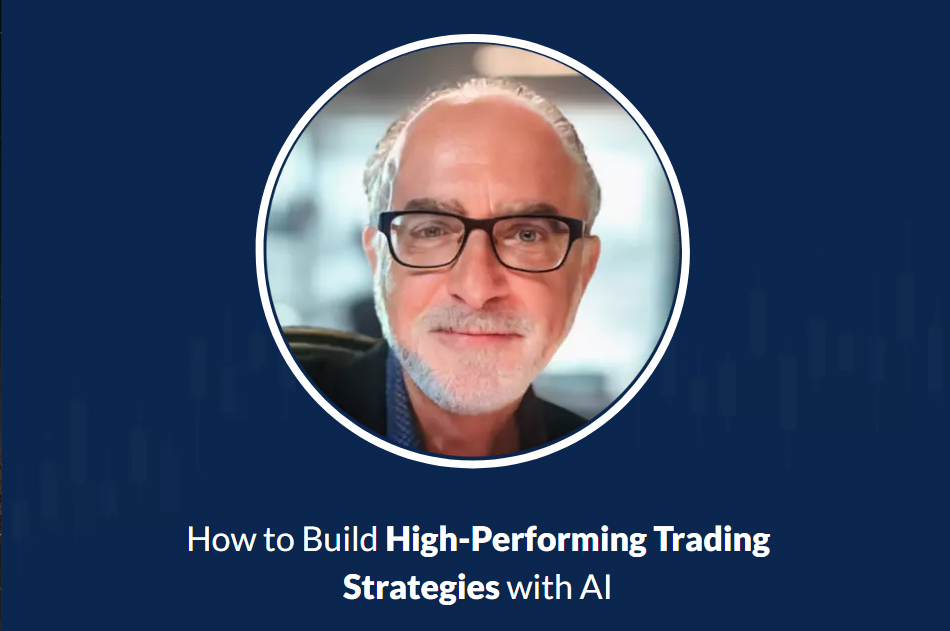
Larry Connors – How To Build High-Performing Trading Strategies With AI
$1,995.00 Original price was: $1,995.00.$55.00Current price is: $55.00.
- 24/7 Contact Support & Telegram - Ecomkevin_1
- You Can Request Any Courses
- Original Courses HD Qualite and links updated
Guaranteed Safe Checkout


Description
Larry Connors – How To Build High-Performing Trading Strategies With AI
In today’s fast-evolving financial markets, traders are constantly searching for an edge. The combination of quantitative research, data-driven systems, and artificial intelligence has transformed how strategies are developed and optimized. Larry Connors – How To Build High-Performing Trading Strategies With AI represents a powerful intersection between traditional quantitative trading and modern AI-driven innovation.
This program focuses on practical implementation rather than theory. It bridges decades of market research experience with cutting-edge machine learning techniques, offering traders a structured pathway to building robust, rule-based trading systems that adapt to modern volatility.
Who Is Larry Connors?
Larry Connors is widely recognized as one of the pioneers of short-term quantitative trading strategies. Over the years, he has developed numerous mean-reversion systems and co-authored influential books on trading strategy development. His work has consistently emphasized:
-
Data-backed decision making
-
Statistical testing
-
Risk management precision
-
Mechanical rule-based systems
Rather than relying on intuition or discretionary judgment, his methodologies center on measurable, repeatable processes.
The Evolution of Trading Strategies in the AI Era
Financial markets have changed dramatically over the last two decades. High-frequency trading firms, algorithmic strategies, and institutional AI models dominate liquidity. Retail traders who rely purely on traditional indicators often struggle to maintain consistency.
Artificial Intelligence offers:
-
Faster data processing
-
Pattern recognition across massive datasets
-
Non-linear relationship detection
-
Continuous optimization capabilities
However, AI alone is not enough. Without proper structure, traders risk overfitting, curve-fitting, or building unstable systems. That’s where a structured quantitative foundation becomes essential.
Core Philosophy Behind High-Performing Systems
The foundation of Larry Connors – How To Build High-Performing Trading Strategies With AI rests on several core principles:
1. Simplicity Before Complexity
Many traders assume that more indicators equal better performance. In reality, simpler strategies often outperform overly complex ones. AI should enhance strong systems—not compensate for weak ones.
2. Statistical Edge First
Before introducing AI, a trading system must demonstrate a measurable edge through historical testing. AI can then refine entry timing, exit efficiency, or volatility filtering.
3. Mean Reversion and Behavioral Bias
Markets are influenced by human psychology. Short-term overreactions create mean-reversion opportunities. Quantifying these behaviors provides a powerful foundation for system building.
4. Risk Management Dominance
Even the best AI-enhanced strategy fails without proper risk control. Position sizing, maximum drawdown limits, and volatility-based adjustments remain critical.
Step-by-Step Framework to Build High-Performing Strategies
Step 1: Market Selection
Choosing the right asset class is fundamental. Stocks, ETFs, indices, futures, and forex pairs each behave differently. Liquidity, volatility, and spread costs must be considered.
AI tools can scan thousands of instruments to identify consistent behavioral patterns.
Step 2: Identify Core Market Behavior
Before applying machine learning, traders must ask:
-
Is the market trending or mean-reverting?
-
Does it respond to volatility spikes?
-
Are there time-based inefficiencies?
Historical data testing helps uncover recurring behavioral traits.
Step 3: Define Entry Logic
A high-performing strategy requires precise entry rules. These may include:
-
RSI-based oversold conditions
-
Volatility expansions
-
Price deviations from moving averages
-
Gap behavior
AI can enhance entry timing by analyzing additional features such as volume anomalies or sentiment overlays.
Step 4: Optimize Exit Strategy
Exits often matter more than entries. A profitable entry can still lose money without efficient exit logic.
Common exit methods include:
-
Time-based exits
-
Profit targets
-
Volatility-adjusted stops
-
Trailing stops
Machine learning can dynamically optimize exit parameters under changing volatility regimes.
Step 5: Risk and Position Sizing
AI models can help:
-
Adjust position size based on volatility
-
Reduce exposure during unstable periods
-
Scale up during statistically favorable environments
Proper capital allocation improves long-term equity growth and reduces drawdown risk.
The Role of AI in Strategy Enhancement
Artificial intelligence enhances—but does not replace—quantitative logic. Here’s how AI strengthens performance:
Feature Engineering
AI can evaluate hundreds of variables simultaneously. Traders can incorporate:
-
Volatility compression patterns
-
Momentum shifts
-
Intermarket correlations
-
Market regime filters
Pattern Recognition
Machine learning identifies subtle patterns invisible to the human eye.
Adaptive Learning
Markets evolve. AI models can retrain periodically to adjust to new conditions.
Monte Carlo Simulation
Stress-testing strategies under thousands of scenarios ensures robustness.
Avoiding Common AI Trading Mistakes
Many traders fail when integrating AI due to:
-
Overfitting historical data
-
Using insufficient sample sizes
-
Ignoring transaction costs
-
Lack of out-of-sample testing
-
Emotional interference
A disciplined approach ensures long-term consistency.
Backtesting vs Forward Testing
Backtesting validates historical edge. Forward testing confirms real-world viability.
Best practices include:
-
Minimum 10+ years of data
-
Multiple market cycles
-
Walk-forward optimization
-
Live simulation before capital deployment
This structured validation protects against unrealistic expectations.
Performance Metrics That Matter
High-performing strategies are evaluated using:
-
CAGR (Compound Annual Growth Rate)
-
Maximum drawdown
-
Sharpe ratio
-
Win rate
-
Profit factor
-
Expectancy per trade
AI models should improve these metrics without increasing risk disproportionately.
The Psychological Edge of Mechanical Systems
One overlooked advantage of systematic trading is emotional neutrality.
Rule-based systems:
-
Remove impulsive decision-making
-
Enforce discipline
-
Provide measurable accountability
-
Reduce stress during volatility
When AI assists mechanical execution, traders gain both analytical and psychological advantages.
Why This Approach Stands Out
What differentiates Larry Connors – How To Build High-Performing Trading Strategies With AI from generic AI trading content is its foundation in decades of quantitative research.
Instead of hype-driven promises, the focus remains on:
-
Measurable statistical edges
-
Risk-adjusted returns
-
Structured experimentation
-
Continuous improvement
It blends traditional quant logic with modern computational power.
Who Should Use This Framework?
This methodology is ideal for:
-
Algorithmic traders
-
Quantitative analysts
-
Systematic swing traders
-
Data-driven investors
-
Traders transitioning from discretionary to mechanical systems
Even beginners can benefit if they are willing to commit to structured testing and disciplined execution.
Long-Term Strategy Sustainability
Markets constantly evolve. Strategies that worked ten years ago may degrade.
To maintain performance:
-
Re-evaluate systems quarterly
-
Monitor drawdown thresholds
-
Update datasets
-
Avoid excessive parameter tweaking
-
Maintain realistic expectations
Sustainability depends on adaptation without over-optimization.
Final Thoughts
In modern markets dominated by automation and institutional algorithms, relying purely on traditional chart patterns is no longer enough. The fusion of quantitative discipline with artificial intelligence provides a competitive edge.
Larry Connors – How To Build High-Performing Trading Strategies With AI represents a structured roadmap to building, testing, optimizing, and deploying mechanical trading systems designed for real-world performance.
By focusing on statistical edges, disciplined execution, and AI-enhanced adaptability, traders can create strategies capable of navigating volatility while maintaining long-term consistency.
The real advantage does not come from complexity—but from intelligent simplicity supported by data and enhanced through artificial intelligence.
Reviews
There are no reviews yet.