
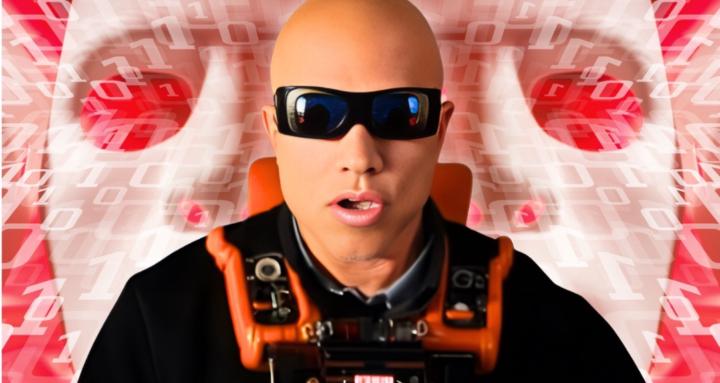
Elmer Locker Jr – This World is a Simulation (May 2026)
$59.00 Original price was: $59.00.$22.00Current price is: $22.00.
- 24/7 Contact Support & Telegram - Ecomkevin_1
- You Can Request Any Courses
- Original Courses HD Qualite and links updated
Guaranteed Safe Checkout


Description
Elmer Locker Jr – This World is a Simulation
In an age where technology is advancing faster than human imagination, discussions about reality, consciousness, and artificial intelligence have become more mainstream than ever before. One of the most fascinating concepts to emerge from modern philosophy and digital culture is the idea that the universe itself may actually be a simulation. Among the voices exploring this mysterious theory, Elmer Locker Jr – This World is a Simulation has attracted attention for its unique perspective, deep philosophical interpretations, and mind-expanding concepts.
The simulation theory challenges the traditional understanding of existence. Instead of seeing reality as purely physical and naturally occurring, the theory suggests that the world humans experience could be a highly advanced digital construct created by a superior intelligence. Whether viewed through the lens of science, spirituality, or metaphysics, the concept continues to inspire debate across the globe.
This article explores the deeper meanings behind Elmer Locker Jr – This World is a Simulation, examining its philosophical implications, connections with modern science, and why so many people are becoming fascinated with the possibility that reality may not be exactly what it appears to be.
Understanding the Simulation Theory
The simulation hypothesis is based on the idea that advanced civilizations may eventually possess enough computational power to simulate entire universes, including conscious beings within them. If future civilizations can create such simulations, then statistically it becomes possible that humans themselves are already living inside one.
The theory gained popularity through philosophers and scientists who questioned the true nature of consciousness and reality. It also became widely discussed after advancements in artificial intelligence, quantum computing, and virtual reality technologies showed how immersive artificial worlds can become.
Elmer Locker Jr – This World is a Simulation expands on these ideas by encouraging people to question their perceptions, routines, and understanding of existence itself. Rather than simply presenting a scientific argument, it dives deeper into spiritual awareness and the hidden patterns that shape human life.
The Relationship Between Consciousness and Reality
One of the central themes connected with simulation theory is consciousness. Human consciousness remains one of the greatest mysteries in science. Despite centuries of research, nobody fully understands how self-awareness emerges or why humans experience reality subjectively.
Many supporters of simulation concepts believe consciousness may operate similarly to a program interacting within a larger system. Thoughts, emotions, memories, and decisions could potentially function like complex coded responses inside an advanced framework.
The ideas surrounding Elmer Locker Jr – This World is a Simulation often encourage readers to think beyond physical limitations and explore the possibility that consciousness exists independently from the body itself. This perspective aligns closely with several spiritual traditions that describe reality as an illusion or temporary experience.
Quantum Physics and the Nature of Reality
Modern quantum physics has introduced theories that seem almost impossible to comprehend using traditional logic. Scientists discovered that particles behave differently when observed, suggesting that observation itself may influence reality.
Some researchers believe these strange behaviors resemble computational rendering, similar to how video games load environments only when players interact with them. Concepts like quantum entanglement, probability waves, and non-locality continue to raise questions about whether the universe operates more like information processing than a purely physical structure.
Within Elmer Locker Jr – This World is a Simulation, these scientific mysteries are often linked to the idea that reality may contain hidden layers beyond human perception. The theory suggests that humans experience only a limited version of a much larger system.
Spiritual Connections to Simulation Theory
Long before computers existed, ancient spiritual traditions described the world as an illusion. In Hindu philosophy, the concept of “Maya” refers to the deceptive nature of physical reality. Similarly, Buddhist teachings often describe life as a temporary construct shaped by perception and attachment.
The simulation theory creates an interesting bridge between ancient spirituality and modern technology. While science uses computational language, spirituality often describes the same ideas through metaphors involving dreams, consciousness, and awakening.
Elmer Locker Jr – This World is a Simulation resonates with audiences because it combines both perspectives. It encourages people to examine not only external reality but also their inner awareness, emotional patterns, and spiritual growth.
For many individuals, the theory is less about proving reality is fake and more about discovering deeper truths hidden beneath everyday existence.
Signs That Make People Question Reality
Many people become interested in simulation theory after experiencing moments that feel impossible to explain logically. These experiences can include:
- Strong déjà vu sensations
- Unusual coincidences
- Repeating number patterns
- Dreams that feel real
- Sudden shifts in perception
- Intuitive experiences
- Feelings of disconnect from reality
While skeptics attribute these experiences to psychology and human pattern recognition, others see them as evidence that reality may contain glitches or programmed structures.
The growing popularity of Elmer Locker Jr – This World is a Simulation reflects society’s increasing curiosity about these unexplained experiences and the desire to understand whether reality contains hidden meanings.
Artificial Intelligence and Simulated Worlds
As artificial intelligence evolves rapidly, humanity is beginning to create increasingly realistic digital environments. Video games today feature lifelike characters, immersive worlds, and AI systems capable of learning and adapting.
This technological progress raises an important question: if humans can eventually create conscious simulations, could another civilization have already done the same?
The concept explored in Elmer Locker Jr – This World is a Simulation becomes even more compelling when viewed alongside advancements in machine learning, neural networks, and virtual reality. Modern technology demonstrates that artificial environments are becoming more convincing every year.
Some futurists believe humanity may eventually reach a stage where distinguishing between physical reality and digital reality becomes impossible.
The Psychological Impact of Simulation Theory
The idea that reality may be simulated can affect people in different ways. For some, it creates fear and existential uncertainty. Others find the theory inspiring because it encourages deeper exploration of life’s purpose and meaning.
When people question reality, they often begin re-evaluating their priorities, relationships, and beliefs. Material success may seem less important compared to consciousness, awareness, and personal growth.
Elmer Locker Jr – This World is a Simulation appeals to audiences because it challenges conventional thinking and inspires philosophical reflection. It encourages individuals to become more conscious of their actions, thoughts, and emotional patterns.
Instead of accepting reality passively, people become active participants in exploring existence itself.
Could Humanity Ever Prove the Simulation Theory?
One of the biggest challenges surrounding simulation theory is the lack of definitive proof. While certain scientific observations appear unusual, none conclusively demonstrate that reality is artificial.
Some scientists suggest that discovering computational limits within physics could provide evidence. Others argue that if the simulation is advanced enough, humans may never be capable of detecting it.
The theories associated with Elmer Locker Jr – This World is a Simulation often focus less on scientific proof and more on expanding awareness and critical thinking. The value lies in questioning assumptions and exploring possibilities rather than claiming absolute certainty.
Regardless of whether the theory is true, it pushes humanity to think more deeply about consciousness, technology, and the structure of existence.
Why Simulation Theory Continues to Grow in Popularity
The rise of social media, digital technology, and artificial intelligence has transformed how humans interact with the world. As virtual experiences become increasingly immersive, the line between digital and physical reality continues to blur.
Movies, documentaries, podcasts, and online communities frequently discuss simulation concepts, attracting millions of curious viewers worldwide. The popularity of Elmer Locker Jr – This World is a Simulation reflects this growing fascination with understanding whether human existence is part of something much larger.
People are naturally drawn to mysteries that challenge conventional reality. Simulation theory combines science fiction, philosophy, spirituality, and modern technology into one powerful concept that sparks endless curiosity.
The Deeper Meaning Behind the Theory
Whether or not reality is literally simulated may ultimately be less important than the questions the theory inspires. The real value lies in encouraging individuals to think critically, explore consciousness, and become more aware of their lives.
The ideas presented in Elmer Locker Jr – This World is a Simulation invite readers to reflect on the nature of existence, the purpose of consciousness, and humanity’s place within the universe.
In many ways, the simulation theory acts as a modern philosophical tool that encourages self-discovery and intellectual exploration. It reminds people that reality may contain far more complexity and mystery than current understanding can fully explain.
Final Thoughts
The fascination surrounding Elmer Locker Jr – This World is a Simulation continues to grow because it speaks to one of humanity’s deepest questions: what is reality?
As science advances and technology becomes more sophisticated, discussions about simulated existence may become even more relevant in the future. Whether viewed scientifically, spiritually, or philosophically, the theory encourages open-minded exploration and deeper awareness.
Humanity may never fully uncover the true nature of reality, but the search itself continues to inspire curiosity, innovation, and profound reflection. In a world filled with uncertainty and rapid technological evolution, simulation theory remains one of the most captivating ideas of the modern era.
Reviews
There are no reviews yet.