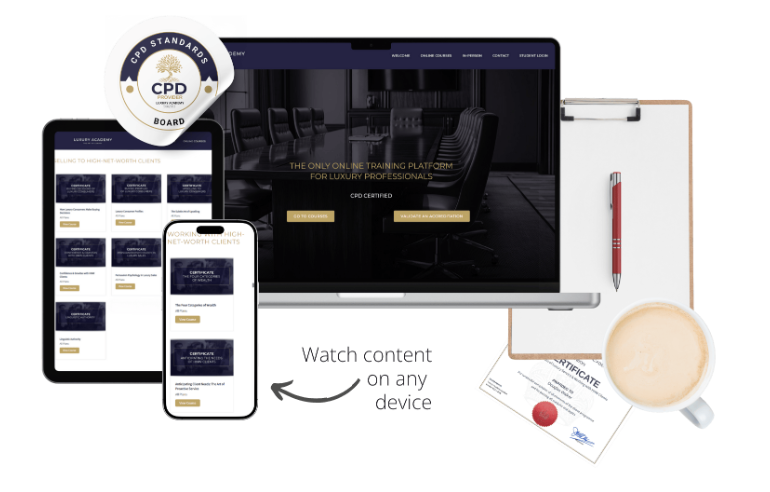
Luxury Academy – Communicating With Luxury Clients
$300.00 Original price was: $300.00.$30.00Current price is: $30.00.
- 24/7 Contact Support & Telegram - Ecomkevin_1
- You Can Request Any Courses
- Original Courses HD Qualite and links updated
Guaranteed Safe Checkout


Description
Luxury Academy – Communicating With Luxury Clients
Introduction
In the luxury industry, success is never driven by price, discounts, or aggressive selling. It is driven by perception, precision, and emotional intelligence. Luxury clients expect more than products or services—they expect experiences, understanding, and respect for their world.
Professionals who fail to master luxury communication often struggle despite having excellent offerings. On the other hand, those who understand the psychology, language, and behavioral nuances of high-net-worth individuals build long-term relationships, loyalty, and reputation.
This is where Luxury Academy – Communicating With Luxury Clients becomes essential. It focuses on refined communication strategies that align with elite expectations, cultural sophistication, and discretion.
Understanding the Luxury Client Mindset
Luxury clients are fundamentally different from mass-market consumers. Their decisions are rarely impulsive and almost never price-driven.
Key Characteristics of Luxury Clients
-
High awareness of quality and craftsmanship
-
Strong preference for personalization
-
Sensitivity to tone, body language, and subtle cues
-
Expectation of exclusivity and discretion
-
Value long-term relationships over transactional interactions
Luxury communication is not about persuasion—it is about alignment.
Why Communication Matters More Than the Product
In luxury markets, products are often similar in quality. What differentiates brands and professionals is how they communicate.
A luxury client remembers:
-
How you spoke
-
How you listened
-
How you respected their time
-
How you made them feel understood
Poor communication can instantly damage credibility, while refined communication builds trust without effort.
The Role of Emotional Intelligence in Luxury Interactions
Luxury clients are emotionally perceptive. They notice:
-
Forced enthusiasm
-
Scripted conversations
-
Sales pressure
-
Lack of authenticity
Successful luxury professionals demonstrate:
-
Calm confidence
-
Active listening
-
Controlled speech
-
Emotional restraint
-
Situational awareness
Emotional intelligence allows you to respond, not react—an essential luxury trait.
Language Patterns That Define Luxury Communication
1. Minimalism in Speech
Luxury communication is concise and intentional. Over-explaining reduces perceived value.
2. Neutral and Refined Vocabulary
Avoid hype, exaggeration, or slang. Luxury language is neutral, composed, and precise.
3. Suggestive, Not Directive
Instead of telling clients what they should do, luxury professionals present options and allow space for decision-making.
The Importance of Listening Over Speaking
One of the biggest mistakes in luxury environments is talking too much.
Luxury clients appreciate professionals who:
-
Ask thoughtful questions
-
Pause before responding
-
Reflect client preferences
-
Remember small personal details
Listening communicates respect—and respect is currency in luxury.
Non-Verbal Communication in Luxury Settings
Words matter, but presence matters more.
Key non-verbal elements include:
-
Controlled body movements
-
Proper posture
-
Calm facial expressions
-
Appropriate eye contact
-
Professional silence
Luxury communication is often felt before it is heard.
Building Trust Without Selling
Luxury clients do not want to feel sold to. They want to feel guided.
Trust is built through:
-
Transparency
-
Consistency
-
Discretion
-
Professional boundaries
Once trust is established, conversion happens naturally.
Cultural Sensitivity and Global Luxury Clients
Luxury is global. Communication must respect:
-
Cultural norms
-
Social hierarchies
-
Regional etiquette
-
Personal space expectations
Misunderstanding cultural nuances can silently end a relationship. Mastery of luxury communication includes global awareness.
Personalization as a Communication Strategy
Luxury clients expect personalization—not as a feature, but as a standard.
Examples:
-
Remembering preferences
-
Referencing previous interactions
-
Adapting tone and pace
-
Offering tailored recommendations
Personalization signals importance and exclusivity.
Handling Objections the Luxury Way
Luxury objections are rarely direct. They are subtle.
Instead of arguing or persuading:
-
Acknowledge concerns calmly
-
Offer alternatives
-
Maintain composure
-
Never pressure
Luxury professionals remain unshaken and respectful at all times.
The Power of Silence in Luxury Conversations
Silence is uncomfortable in mass sales—but powerful in luxury.
Strategic silence:
-
Encourages clients to speak
-
Creates authority
-
Demonstrates confidence
-
Prevents over-selling
Silence, when used correctly, elevates perception.
Maintaining Long-Term Luxury Relationships
Luxury communication does not end after a sale.
Long-term engagement includes:
-
Periodic check-ins
-
Thoughtful follow-ups
-
Non-transactional conversations
-
Exclusive updates
Luxury relationships are nurtured, not chased.
Digital Communication With Luxury Clients
Luxury communication extends to email, messaging, and virtual interactions.
Best practices:
-
Short, elegant emails
-
Clear subject lines
-
Polite response timing
-
No excessive emojis or abbreviations
Digital presence must match offline refinement.
Common Mistakes That Damage Luxury Credibility
Avoid:
-
Over-familiarity
-
Excessive enthusiasm
-
Hard selling
-
Price justification
-
Casual language
Luxury clients notice everything—even what is not said.
Why Professional Training Matters in Luxury Communication
Luxury communication is a skill, not intuition.
Structured training helps professionals:
-
Develop confidence
-
Avoid costly mistakes
-
Understand elite psychology
-
Communicate with precision
This is why Luxury Academy – Communicating With Luxury Clients stands out as a valuable learning framework for professionals operating in high-end markets.
Who Benefits From Mastering Luxury Communication?
-
Luxury real estate consultants
-
High-end sales professionals
-
Brand managers
-
Hospitality executives
-
Personal stylists and advisors
-
Entrepreneurs serving premium clients
Anyone interacting with affluent clients benefits from mastering this discipline.
Final Thoughts
Luxury communication is about restraint, respect, and refinement. It is not loud, fast, or aggressive—it is intentional, calm, and intelligent.
Those who master this art gain more than clients—they gain reputation, loyalty, and influence.
In the world of luxury, how you communicate is not a detail—it is the foundation.
Reviews
There are no reviews yet.