
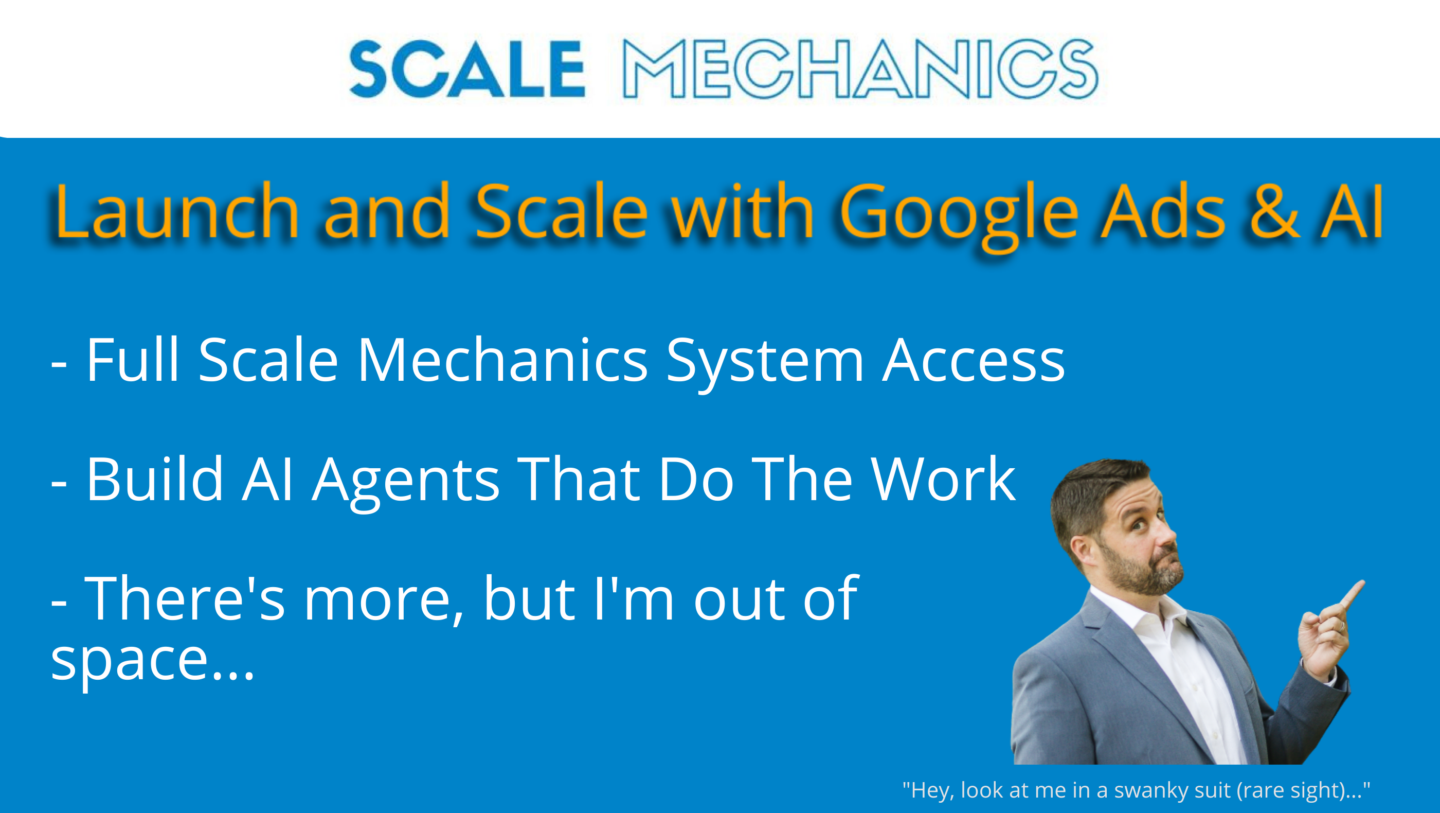
Patrick Kenney – Scale Mechanics
$79.00 Original price was: $79.00.$30.00Current price is: $30.00.
- 24/7 Contact Support & Telegram - Ecomkevin_1
- You Can Request Any Courses
- Original Courses HD Qualite and links updated
Guaranteed Safe Checkout


Description
Patrick Kenney – Scale Mechanics: A Deep Breakdown of Strategic Growth Mastery
Scaling a business is rarely a straight road, and many founders struggle to expand beyond the early stages because they lack a structured approach. What sets high-growth companies apart is not luck or timing but a clear framework for operational efficiency, team development, market positioning, and long-term strategic alignment. This is exactly where the principles behind Patrick Kenney – Scale Mechanics come into play: a methodical system that simplifies scaling, removes barriers to growth, and provides leaders with the clarity they need to build sustainable momentum.
This detailed guide explores the philosophy, structure, and execution strategies behind this scaling approach. It has been crafted to provide entrepreneurs, executives, and operations leaders with a refined look at how scaling can be executed with precision, discipline, and visionary thinking.
Understanding the Foundations of Scale Mechanics
Before any organization attempts to scale, it must understand the forces driving its current growth. Most businesses hit bottlenecks because their processes evolve in pieces rather than through a unified plan. Scale Mechanics aims to resolve this by standardizing the operational backbone of a company so every department is aligned with the same long-term direction.
The Importance of Foundational Clarity
Sustainable growth begins with clarity. Leaders must understand their mission, desired market position, and core value proposition. Without this, scaling introduces chaos rather than progress. Clarity shapes decision-making, resource allocation, and strategic focus. It forces organizations to articulate who they serve, why they matter, and what unique advantage they bring.
Why Many Companies Struggle to Scale
Companies often fail to scale because:
-
Their processes rely too heavily on individual people rather than systems
-
They expand faster than their infrastructure can support
-
They do not measure key performance indicators consistently
-
Their teams lack shared alignment and communication
-
They focus on short-term wins rather than long-term stability
A structured scaling framework becomes essential for addressing these core issues. It ensures that growth does not dilute quality, overwhelm the team, or compromise profitability.
The Strategic Pillars Behind the Scaling Approach
To scale effectively, businesses must focus on the core pillars that drive long-term success. These pillars act as a roadmap, guiding leaders through the complexities of expansion without losing strategic direction.
1. Operational Architecture
Operational architecture refers to the systemization of how work is done. Every internal process—customer onboarding, hiring, product delivery, marketing, finance, and communication—must be documented and optimized.
Strong operational architecture ensures:
-
Predictable performance across teams
-
Consistency in product or service delivery
-
Scalable workflows that adapt to growth
-
Reduced dependency on individual talent
Businesses that invest in this pillar build strong foundations capable of supporting increased demand without sacrificing efficiency.
2. Leadership Development and Team Design
Scaling requires leaders who are not only visionaries but also systems thinkers. As the organization grows, leadership must evolve with it. Developing managers, empowering teams, and designing roles that support future growth become essential tasks.
A scalable team structure includes:
-
Clear role responsibilities
-
Transparent communication channels
-
Leadership coaching and development
-
Strong hiring frameworks aligned with company values
The right team can elevate a company to new heights, while misaligned talent can slow momentum. This pillar ensures that every person supports the mission and contributes to long-term success.
3. Accountability Frameworks
Accountability is one of the most overlooked components of scaling. Without measurable responsibility, companies develop gaps in performance and communication that weaken their ability to grow sustainably.
A high-performance accountability system features:
-
Defined KPIs for each department
-
Weekly or monthly performance reviews
-
Scorecards that track progress across key metrics
-
Reporting structures that ensure transparency
This discipline keeps every team aligned, motivated, and connected to the company’s goals.
4. Market Positioning and Strategic Messaging
As a company scales, its brand identity and market message must evolve. What resonates with early adopters may not appeal to a broader market. Clear positioning allows companies to stand out in competitive environments.
Effective positioning includes:
-
A well-defined customer avatar
-
A message that communicates value instantly
-
Competitive differentiation
-
Pricing aligned with the perceived value
-
Marketing channels tailored to ideal buyers
Scaling becomes far more predictable when the brand speaks directly to the right audience with a clear, unified voice.
5. Data-Driven Decision Making
Data removes guesswork from scaling. Whether analyzing marketing performance, customer retention, financial projections, or product satisfaction, leaders must rely on measurable insights.
Key focuses include:
-
Real-time data dashboards
-
Predictive analytics
-
Customer lifetime value models
-
Funnel analysis for marketing and sales
-
Cost efficiency metrics
This pillar ensures that decisions are grounded in facts rather than assumptions, dramatically reducing risk while increasing profitability.
Building a Scalable Business Model
A scalable business model is designed to handle increased demand without equivalent increases in cost or resources. This involves aligning pricing, delivery systems, customer workflows, and automation to maximize efficiency.
Creating Leverage Through Systems
Leverage determines how quickly an organization can scale. Systems, automation, and optimized workflows create leverage by freeing human time and reducing errors.
Examples of leverage include:
-
Automated onboarding
-
Consistent sales scripts and frameworks
-
CRM and project management tools
-
Standardized marketing funnels
These systems allow teams to focus on innovation rather than manual tasks.
Revenue Expansion and Financial Stability
Scaling requires a strong financial strategy. Companies must balance aggressive growth with responsible financial management.
This includes:
-
Diversified revenue streams
-
Predictable recurring income
-
Controlled expenses
-
Cash flow forecasting
-
Budgeting for operational growth
A business with financial resilience scales with confidence rather than fear.
The Human Element Behind Strategic Growth
Scaling is not solely about systems—it is also about people. The human element determines culture, innovation, and adaptability. When teams feel aligned with the mission, productivity increases and growth becomes a shared objective.
Cultivating a Growth-Driven Culture
Culture determines behavior across the company. A strong culture fosters accountability, creativity, and customer obsession.
Key cultural elements include:
-
Open communication
-
Psychological safety
-
Encouragement of innovation
-
Reward structures for high performance
With the right culture, scaling becomes easier because resistance to change decreases.
Developing Leaders Who Scale with the Business
Scaling often exposes weaknesses in leadership. To maintain momentum, leaders must advance their skills, improve decision-making, and embrace strategic thinking.
Effective leaders:
-
Communicate vision clearly
-
Delegate effectively
-
Encourage team autonomy
-
Evaluate performance objectively
-
Adapt to new challenges
Strong leadership ensures that growth remains stable during transitions.
Long-Term Sustainability and Future-Focused Strategy
Scaling is not a one-time achievement; it is an ongoing commitment to growth and improvement. Businesses must continue refining processes, exploring new markets, and strengthening customer relationships to remain competitive.
Preparing for Market Changes
Successful companies anticipate industry shifts rather than reacting to them. They conduct ongoing market research, track trends, and innovate before their competitors do.
Continuous Improvement as a Core Principle
Every system, process, and strategy can be refined. The most scalable organizations operate with a mindset of constant optimization.
This includes:
-
Annual strategic reviews
-
Quarterly process audits
-
Team feedback loops
-
Customer experience analysis
Continuous improvement ensures long-term growth rather than temporary success.
Conclusion: The Path to Scalable Success
Scaling a business requires intention, discipline, and a structured approach. By adopting a framework that emphasizes operational strength, leadership development, accountability, strategic messaging, and data-driven decision making, organizations can grow with confidence. The principles behind this growth model provide a roadmap for companies ready to elevate their operations and unlock their full potential.
Reviews
There are no reviews yet.